Showing posts with label bacteria. Show all posts

Wednesday, July 24, 2013

Sour Barrel Aged Beer 101 - Brewing & Yeasts

Last week we outlined why sour beers are such a pain in the butt to make in Sour Barrel Aged Beer 101- Challenge Accepted! This week, thanks to the power of the interwebz we can answer some of your questions you posted on our Facebook & Twitter. If you have a sour bottle handy, now's probably a good time to pop it open!

Here are some of the common questions related to brewing sour barrel aged beers, answered by Tyler King, our Senior Director of Brewing Operations who we're pretty sure you know by now, and the lovely Jessica Davis, our brilliant Quality Specialist.


Jess has been on our team for several months now and we are thrilled to have on board with her years of experience in SCIENCE! She knows how to do all kinds of weird things in our fancy lab, and she has been handling the tremendous task of keeping our yeasts and beers happy & healthy. If you ever see her around the Tasting Room, give her a sanitary high-five!

Wednesday, July 17, 2013

Sour Barrel Aged Beer 101 -- Challenge Accepted!


Do you remember a time before you knew about sour, barrel aged beer? You knew what beer was (an awesome beverage), you knew what sour tasted like (remember warheads?) and you knew other delicious beverages came out of barrels (hello wine).

While our fondness for this style is quite apparent in our portfolio, and your support of our experimentation has enabled us to continue to develop new twists on our sour line up, we often hear a demand for even more variety and availability of these tasty treats.

So in the spirit of sour barrel aged beer month, and to quell your awesome curiosity, we want to look closer at three parts of the process of making these beers and explore the risks, pampering special attention, and extra time it takes to make sure our sour barrel aged beers grow up to be happy, healthy 750 mL babes.


We'll look at each part of the process a little deeper, using some questions submitted by you via our Facebook & Twitter, in the following posts about:

Thursday, January 19, 2012

Foods made with healthy bacteria

It may seem weird to some people that we brew our sour beers with bacteria, but check out some of these very common foods that are made with similar micro-organisms.


KIMCHI!

Kimchi fermentation is carried out by various microorganisms present in the raw materials and ingredients of kimchi. Among them, lactic acid bacteria which can grow in 3% brine play the most active role in the kimchi fermentation; it suppresses the growth of other bacteria which could grow under such conditions.

Among the 200 bacteria isolated form kimchi, the important microorganisms in kimchi fermentation are known to be Lactobacillus plantarum, L. Brevis, Streptococcus faecalis, Leuconostoc mesenteroides, and Pediococcus pentosaceus. Most kinds of bacteria belonging to the genus Lactobacillus have been found to be present in kimchi.


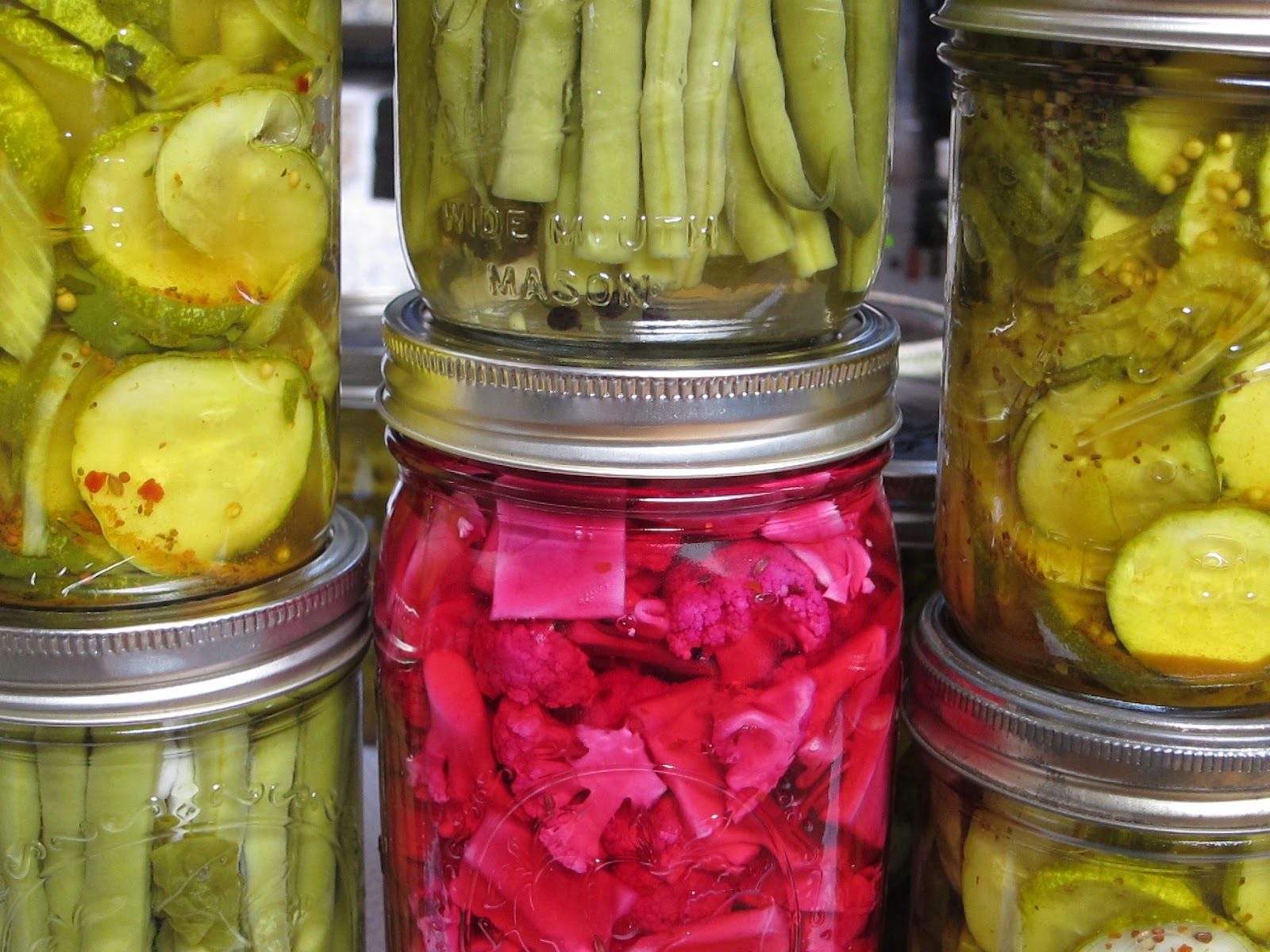
PICKLES!

All foods are continually assaulted by many kinds of microorganisms, racing to eat as much as possible. When you pickle vegetables by fermentation, you help one type of microbe win this "race."

More specifically, you create special conditions in your pickle crock that keep away "bad" spoilage-causing microorganisms, and that allow a unique class of "good" bacteria, called lactic acid bacteria, to colonize your cucumbers.

As lactic acid bacteria grow in your pickle crock, they digest sugars in the cucumbers and produce lactic acid. Not only does this acid give the pickles their characteristic sour tang, it controls the spread of spoilage microbes. Also, by gobbling up the sugars, lactic acid bacteria remove a potential food source for bad bacteria.

(http://www.exploratorium.edu/cooking/pickles/salt.html)


SOURDOUGH BREAD!

"Here's a sourdough bâtard from Artisan Bakers in Sonoma," says Danielle Forestier, a French-trained master baker in Oakland, just across the bay from San Francisco. "I'm checking the package," she reports over the phone. "It's made of unbleached flour, water, and salt. Three ingredients, lots of taste, great texture." Yet a typical supermarket white bread has more than 25 ingredients and additives and still tastes vapid. 

The difference is those fermenting bugs. The baker's yeast in supermarket bread creates a virtual monoculture of S. cerevisiae. The sourdough bâtard, on the other hand, is a product of natural fermentation involving wild yeasts and bacteria. Almost all the bacteria are lactobacilli, cousins of the bacteria that curdle milk into yogurt and cheese. "These lactobacilli outnumber yeasts in sourdough by as many as 100 to one," Sugihara says. It's the acids they make that give sourdough its tartness. Not only that, say European researchers, the bacteria also contribute carbon dioxide as well as aromatic compounds that infuse bread with flavor and delicious smells.

excerpt from http://discovermagazine.com/2003/sep/featscienceof


YOGURT!

Yogurt is made when specific bacteria are added to milk in a controlled environment and allowed to ferment. 

For a dairy product to be called yogurt, it must contain two bacteria: Streptococcus thermophilus and Lactobacillus bulgaricus. Many types of yogurt incorporate other species as well, including Lactobacillus acidophilus and Lactobacillus casei. In many countries, yogurt must also contain live bacteria and remain unpasteurized, with pasteurized yogurts being specially labeled. Pasteurized yogurt has a long shelf life and does not need to be kept refrigerated, but it also doesn't have the health benefits of live yogurt.

Wednesday, July 27, 2011

Bugs

Pediococcus plated on The Bruery's lab media

Meet some of the microorganisms that are responsible for the beer made at The Bruery.

Yes, it’s true, you are sharing your beer with other living things. Since all of our beers here at The Bruery are unfiltered, they are indeed alive when you sit down to enjoy your drink. The delicate and bold flavors produced through fermentation help give beer the unique properties you experience along with the quality of the ingredients used. While there are a variety of cultures used at The Bruery, some are more important than others. They are Brettanomyces, Lactobacillus, and Pediococcus. Their importance is because of their roles as both fermentative species and contaminants.

Brettanomyces is considered a wild yeast and is noted for the “farmhouse” flavor profile that it produces in beer. Lactobacillus and Pediococcus are lactic acid producing bacteria. They are used in the fermentations of food products such as sauerkraut, yogurt, cheese, chocolate, and kimchi. Lactic acid bacteria are used in the production of lambic-style ales, Flemish-style red ales and other similar beers; they produce the lactic acid that gives these beers their characteristically sour taste.

While these organisms can be used to make wonderful and complex beers, they can also prove to be persistent contaminants. The flavors created through their fermentative action can frequently produce unfavorable sensory characteristics in beer in which their presence is not intended. Simply put, we want to control microbial fermentation in our beer so that the flavors we target are found only in the final product of specific beers, not all of our beers.

To this end, the quality control process is our greatest tool. Since brewing uses living organisms, we are at the mercy of these yeast and bacteria. Exhibiting control over the process gives brewers the power to create the final product that they have in mind. There have even been historical European brewers quoted as saying that god is truly the maker of beer, we simply help guide it along it's path.

Long before the bottle reaches your lips, steps are taken to make sure the quality is maintained. We utilize a number of preventative measures to ensure that a 'bad beer' is never something that you, the consumer, have to experience in connection with our brand.

These measures include regular and thorough tank cleaning, and lab testing at many intervals in the brewing and aging process. In short, all our beer is sampled and tested at various stages during their fermentation and development - including bottling and kegging. All samples are plated on selective and differential media that allow us to see what, exactly, is in our beers. Rest assured that when you are enjoying a hand-crafted Bruery beer, much effort has been invested into ensuring that you receive the finest fermented beverage on the market.

--Kristen Bennett
Laboratory Intern and Technician 

Brettanomyces plated on The Bruery's lab media

Close up of Lactobaccilus bacteria.  Hello little friends!

Lactobaccilus bacteria plated on The Bruery's lab media