The word Cicerone (pronounced sis-uh-rohn) has been chosen to designate those with proven expertise in selecting, acquiring and serving today’s wide range of beers ... Only those who have passed the requisite test of knowledge and tasting skill can call themselves a Cicerone. -- Cicerone.org
Tomorrow is another round of the Certified Cicerone® exam in Southern California and we look forward to supporting this organization by offering up our conference room to host the testing. Our very own Patrick Rue and Director of Marketing Benjamin Weiss are both Certified Cicerones® so it seemed like the perfect opportunity to ask Ben a couple questions about becoming a Cicy!
Sunday, May 5, 2013
Monday, April 29, 2013
Bourbon Barrel Aged Bois -- Part 1 of 5 of Our Anniversary Beers
Five years ago, I couldn't have fathomed what The Bruery is today. We've reached this point due to a lot of hard work, allowing creativity to steer our direction, being constructively critical of ourselves, and taking on significant risks along the way. The next five years should be just as exciting. I'm so thankful for the wonderful people I get to work with who put their heart and soul into their work, and our customers who support our brewing habit! -- Patrick Rue
May is our anniversary month and we are excited to release Bois (pronounced "Bwah!"), our fifth anniversary ale this week! This beer is brewed in the English-style Old Ale tradition using our house Belgian yeast strain and then blended using the solera method, where a portion of each of our anniversary ales is saved in our barrels and blended in with the next year's production, providing more complexity and depth of character that comes with age.
In our fifth year, we've decided that using just one kind of barrel is not enough for this beer. Five separate small batches of Bois have been quietly resting in five different kinds of barrels: bourbon, rye, brandy, new American oak, and French oak.
So what kind of differences will you see between these batches? We're studying each type of spirit and barrel for the month of May to discuss just that. For week one, we're going to look a little closer at the beautiful world of bourbon.

May is our anniversary month and we are excited to release Bois (pronounced "Bwah!"), our fifth anniversary ale this week! This beer is brewed in the English-style Old Ale tradition using our house Belgian yeast strain and then blended using the solera method, where a portion of each of our anniversary ales is saved in our barrels and blended in with the next year's production, providing more complexity and depth of character that comes with age.
In our fifth year, we've decided that using just one kind of barrel is not enough for this beer. Five separate small batches of Bois have been quietly resting in five different kinds of barrels: bourbon, rye, brandy, new American oak, and French oak.
So what kind of differences will you see between these batches? We're studying each type of spirit and barrel for the month of May to discuss just that. For week one, we're going to look a little closer at the beautiful world of bourbon.
Labels:
anniversary,
barrel aged beer,
bois,
bourbon,
josh rapp,
patrick rue,
preston van winkle,
whiskey
Monday, January 7, 2013
Provisions is Closing - A Letter from Patrick
Dear Bruery Supporters,
I regret to inform you that the decision has been made to close The Bruery Provisions in Old Towne Orange, CA. This decision comes with a great deal of heartache. Provisions has become an important part of the Orange County craft beer scene. Family, friends, co-workers and I have enjoyed many pints and cheese plates, and I’ve have had the distinct pleasure to work with a number of passionate and talented people at Provisions. As fantastic as Provisions is, it has taken a disproportionate amount of The Bruery’s resources to operate and I decided it would be best for the long term success of the company to focus on making beer rather than operating a bottle shop and beer bar.
Opening Provisions was the realization of a dream for me. After travelling to many wonderful beer establishments around the country, the places I’ve enjoyed the most are a unique combination of a beer bar and a bottle shop. Other than being a one-stop shop for all beer needs, I noticed a common trait in that they have a great sense of community. This format is a great opportunity to educate about the diversity of beer, and a place to express a common interest in craft beer. When the opportunity arose to open such a concept in Old Towne Orange, steps away from my alma mater, Chapman Law School, I had to do it.
Having Provisions as part of our efforts over the last three years has been a great education for many of us within The Bruery on the retail side of the beer business. The Provisions Team has done a superb job in operating a first class operation, and their commitment to Provisions has made this decision all the more difficult. However, after examining Provisions within the context of what The Bruery should be, I realized it has taken a significant amount of our efforts away from our core purpose. To put it simply, we are a small company, we can’t do everything.
Our core purpose is to make beer, really fantastic beer, and to continually improve the quality of our beer. We’ve made some huge commitments to this core purpose by investing in fermentation capacity, which has increased our production capacity by 130% in the last few months. About 40% of our beer is aged in barrels for a year or longer, and we’ve amassed a collection of over 3,000 barrels to achieve this. In evaluating how The Bruery should operate in order to achieve its goals, it became apparent Provisions is not the best use of our limited resources. At this point, the best use of our efforts is focusing on innovation and quality in brewing, working with our many distributors and the thousands of establishments that carry our beer, and serving our customers directly through our Tasting Room, our website and our Society membership bases.
If Provisions was a tool to educate people about craft beer and help move the industry and culture forward, then it was a rousing success. Since its inception, we’ve introduced thousands of people to our passion for craft beer. We leave the customers of Provisions in good hands with numerous other locations that have been established within Old Towne Orange, and beyond, that serve and specialize in craft beer.
We will continue to serve Orange County’s craft beer needs through our Tasting Room, adjacent to our production facility in Placentia, which has recently undergone renovations as well. It now comfortably seats nearly 100 people and offers up to 40 different beers on draft at any given time along with our full selection of bottled beer available to-go, all hand crafted by The Bruery. We’ve also completed our 3 BBL (93 gallon) pilot system that will allow us to hone our recipes and offer unique, experimental batches on draft. All of us at The Bruery hope to see many of you picking up where you left off - with a flight of beer at our Tasting Room, watching us brew.
As Winston Churchill once said, "This is not the end. This is not even the beginning of the end. It is, instead, the end of the beginning.” And so it is for The Bruery. Our first 5 years are coming to a close and we are now putting ourselves on track for the next 5 years of craft beer and beyond. We are thankful to our customers and employees who have joined us on this journey.
Sincerely,
Patrick Rue
The Bruery
I regret to inform you that the decision has been made to close The Bruery Provisions in Old Towne Orange, CA. This decision comes with a great deal of heartache. Provisions has become an important part of the Orange County craft beer scene. Family, friends, co-workers and I have enjoyed many pints and cheese plates, and I’ve have had the distinct pleasure to work with a number of passionate and talented people at Provisions. As fantastic as Provisions is, it has taken a disproportionate amount of The Bruery’s resources to operate and I decided it would be best for the long term success of the company to focus on making beer rather than operating a bottle shop and beer bar.
Opening Provisions was the realization of a dream for me. After travelling to many wonderful beer establishments around the country, the places I’ve enjoyed the most are a unique combination of a beer bar and a bottle shop. Other than being a one-stop shop for all beer needs, I noticed a common trait in that they have a great sense of community. This format is a great opportunity to educate about the diversity of beer, and a place to express a common interest in craft beer. When the opportunity arose to open such a concept in Old Towne Orange, steps away from my alma mater, Chapman Law School, I had to do it.
Having Provisions as part of our efforts over the last three years has been a great education for many of us within The Bruery on the retail side of the beer business. The Provisions Team has done a superb job in operating a first class operation, and their commitment to Provisions has made this decision all the more difficult. However, after examining Provisions within the context of what The Bruery should be, I realized it has taken a significant amount of our efforts away from our core purpose. To put it simply, we are a small company, we can’t do everything.
Our core purpose is to make beer, really fantastic beer, and to continually improve the quality of our beer. We’ve made some huge commitments to this core purpose by investing in fermentation capacity, which has increased our production capacity by 130% in the last few months. About 40% of our beer is aged in barrels for a year or longer, and we’ve amassed a collection of over 3,000 barrels to achieve this. In evaluating how The Bruery should operate in order to achieve its goals, it became apparent Provisions is not the best use of our limited resources. At this point, the best use of our efforts is focusing on innovation and quality in brewing, working with our many distributors and the thousands of establishments that carry our beer, and serving our customers directly through our Tasting Room, our website and our Society membership bases.
If Provisions was a tool to educate people about craft beer and help move the industry and culture forward, then it was a rousing success. Since its inception, we’ve introduced thousands of people to our passion for craft beer. We leave the customers of Provisions in good hands with numerous other locations that have been established within Old Towne Orange, and beyond, that serve and specialize in craft beer.
We will continue to serve Orange County’s craft beer needs through our Tasting Room, adjacent to our production facility in Placentia, which has recently undergone renovations as well. It now comfortably seats nearly 100 people and offers up to 40 different beers on draft at any given time along with our full selection of bottled beer available to-go, all hand crafted by The Bruery. We’ve also completed our 3 BBL (93 gallon) pilot system that will allow us to hone our recipes and offer unique, experimental batches on draft. All of us at The Bruery hope to see many of you picking up where you left off - with a flight of beer at our Tasting Room, watching us brew.
As Winston Churchill once said, "This is not the end. This is not even the beginning of the end. It is, instead, the end of the beginning.” And so it is for The Bruery. Our first 5 years are coming to a close and we are now putting ourselves on track for the next 5 years of craft beer and beyond. We are thankful to our customers and employees who have joined us on this journey.
Sincerely,
Patrick Rue
The Bruery
Monday, August 13, 2012
Drink That Funky Porter…
If you have been
frequenting The Bruery’s new tasting room since it opened a few
weeks ago, you may have noticed (until recently at least) a set of
beers bearing the name Carmen aged with various fruits. Carmen is a
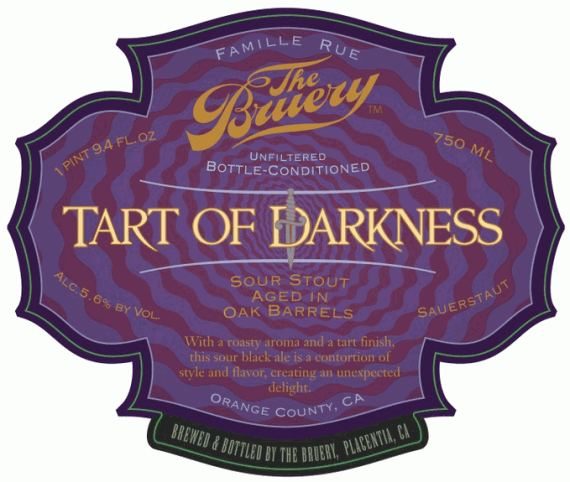
dark and beautiful sour ale not entirely unlike our sour stout, Tart
of Darkness.
Sour dark ales?! WTF, people who write my paycheck.
WTF, indeed.
Brewing
traditionalists might cry-foul at the mere notion of The Bruery
mucking about in the pantheon of classic styles such as stouts, not
unlike some beleaguered 10 Commandments of a forlorn and forgotten
beer god who still believes in Leave It To Beaver family archetypes
and pisses on the leg of anyone who uses the phrase “welcome to the
21st century”. And to those advocates of the steadfast,
the tried, and the boringly true, I say: “Whatevs”.
Anywho…back to
dark sour ales. Beers like Tart of Darkness and Carmen might sound
strange to some, but believe me, there is some historical precedence.
Brettanomyces, the
yeasts infamously found in Belgian Lambic, Farmhouse, and sour ales
that produce aromas of horse blanket, smoke, and sweat…in a porter
or a stout? You’re darn right.
I have an unhealthy
fascination with historical beers—beers that, were it not for my
propensity to piss off my wife with incessant homebrewed
beer-tinkering, I might never get to try. Porter and Stout are two
such historical brews that have held my carboys and kettles captive
for a long time.
The history of
porter and stout is the stuff of legends in the beer world, and like
most legends, it holds about as much truth as a Ken Lay testimony.
(Incidentally, has anyone noticed yet that my culture references are
severely out of date?) Porter (and along with almost every other
beer style) has had its history passed down through time in a game of
academic telephone to the point that the modern version of the tale
is filled with half-truths and speculation. There are a few things
we can be sure of though, one of which is that Brettanomyces enjoyed
porter just as much as the rest of us.
Modern accounts can
make for some confusing reading, however. Some describe historical
porter as tart and acidic from the use of Brettanomyces yeasts.
While I’m sure that Brett just dove right into the beer and made a
lovely home for its brood of bizarre flavors and aromas, it is not a
yeast that will produce appreciable acidity in beer. (It can
make a beer VERY dry by eating all the sugars that regular brewer’s
yeasts think they’re too good for, and this dryness can sometimes
be mistaken for acidity, however to most people the two perceptions
are very different.) Brett will produce a fair amount of acetic acid
(the acid in vinegar) if the conditions are just right (properly
cellared barreled beer ain’t it though), but tartness and acidity
in beer are usually associated with lactic acid production, something
that Brett doesn’t do very well. Bacteria like Pediococcus and
Lactobacillus do make a lot of lactic acid, which is why they are
collectively and mundanely referred to as Lactic Acid Bacteria. So
if some of these accounts are to be believed then it’s likely that
producing a traditional porter would require pitching in some of
these guys as well.
Really, I can only
support my theory by extrapolating from statements like those above,
though it would make sense that Brett wasn’t the only thing
influencing historical porters in the barrel. (By the way, esteemed
beer blogger Martyn Cornell has offered some interesting notes on
historical porter flavor worth reading, here.)
A lot of microbes can hang out in barrels, lactic acid bacteria
being among them. Part of my graduate research was based on
complaints from winemakers that whenever they found Brettanomyces in
a barrel they often found Pediococcus as well. Lactic acid
production by these bacteria is fairly strain-dependent, with some
producing enough make your mouth cave in and others spitting out only
tiny amounts. So it’s likely that you would have found some
porters that were not as sour as others, potentially explaining the
discrepancies of reputed sour levels. Also, some strains of
Lactobacillus, though rare, can produce phenolic compounds similar to
Brett yeasts.
So what am I saying
here? While it’s probably not possible for us to ever know for
sure, I think the argument can be made that early barreled porters
had a fair amount in common with American sour beers or even Belgian
Lambic, at least spiritually. It’s fascinating to think about what
these historical beers actually tasted like. It also makes me wonder
about other brews back in the 18th and 19th
centuries. A lot of beers were barreled for shipping purposes or
just to condition for a while. If Brett was a major part of Porter
all those years ago, is it not possible that perhaps the famously
barreled English IPA was also a Brett bomb, or that some of them may
have even had some acidity? (The hops in IPA’s are usually pretty
good deterrents against lactic acid bacteria, though a lot of strains
do have resistance to them.) I’ve never seen reference in the beer
history books about IPA’s referred to as “barnyardy” or “tart,”
but who knows? Maybe the game of beer history telephone has obscured
more of brewing’s oh so funky past. In any case, here at The
Bruery we’re going to keep on keepin’ on, experimenting with
styles and bending the rules. But in the case of Tart of Darkness
and Carmen, I think that in a way we’re just following in the
footsteps of all the famous beer-benders of brewing’s past.
Tuesday, July 31, 2012
Our Wood Cellarman's take on Sour Ales
-by Matt Strickland, The Bruery's Wood Cellarman
I encountered my
first true sour ale about 7 years ago on trip to Chicago. I was a
few years into my switch from big-brew swiller to microbrew maven
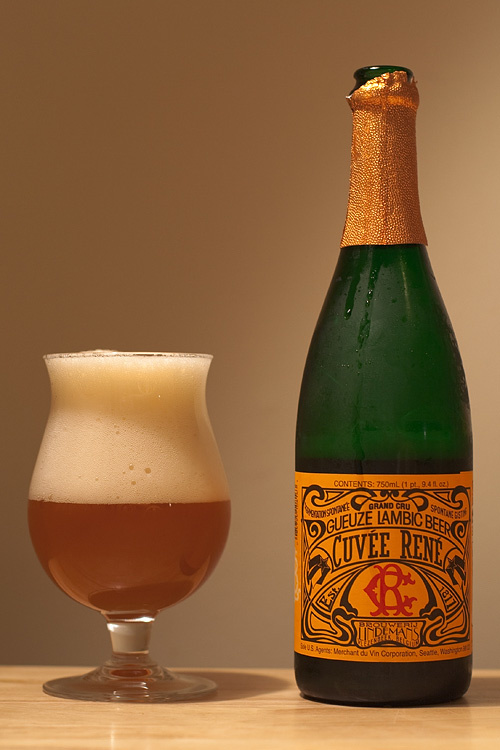
when I came across a bottle of Lindeman’s Gueuze Cuvée René. I
had heard of said beer through various outlets, and most of the
reviews had been complimentary though a bit esoteric. The common
aroma descriptors at the time were “barnyard”, “horse blanket”,
and “sweat”, usually followed by acclaim and elitist caveats to
the effect of “Not for the faint of heart.” Well, brew-love
bravado brought out my wallet and I purchased the bottle for
consumption later that night. I popped the cork with an air of
sophistication and poured glasses for my two friends. We smelled.
We sipped. They spit. I choked it down fast enough to feign an
appreciative grin. It was one of those moments when I thought, “I
should like this, but I don’t.” Further research
led me to the conclusion that, like brussels sprouts, sour beer was
an acquired taste. This concerned me. Despite my parents’ best
intentions and dinner table ruses, I still can’t stand sprouts of
any kind. All the same, I was determined to understand what the sour
ale hubbub was about.
I wrote this piece about 8 months ago for another website I was
writing for at the time (www.grogsociety.com). Since we have a Sour
Beer class coming up at The Bruery Provisions on August 13th
(Stop by or email Provisions for more details) I thought this would
be a good time to resurrect it for The Bruery blog. Of course you
could also be cynical about the damn thing and call me lazy for
rehashing stuff. You would also be right…and not my favorite
person.
The
Power of Sour: The Emergence of Modern Sour Beers
When
I was 11 or 12 I considered myself a candy connoisseur. My appetite
for those treats in the grocery-checkout lane was rarely sated.
Always on the hunt for the next great sugar high, I found in my hand
one day a bag of Warheads. (For the uninitiated, Warheads were
superlatively sour bite-sized pieces of tooth torture.) I popped the
first one into my mouth. My lips puckered and my tongue began to
drown in cleansing saliva. I was hooked. From that day forward, I
sought only the sourest of sour candies: lemon drops, candy straws,
and gumballs that seemed to resemble miniature Death-Stars made
solely of citric acid. I couldn’t get enough of that teeth-rotting
goodness, but it was never sour enough. My friends and I searched
relentlessly for something that would take tartness to the next
level. We wanted pleasure and pain, the pre-adolescent equivalent to
the type of jack-assery that ensues when you combine a nose, a straw,
and wasabi.
My wife may dispute
this point, but I am an adult now. My candy intake is strictly
monitored. The sour candy indiscretions of my youth are long behind
me. “Sellout!”, you say? No, I’ve just found new ways to get
my fix. Sour candy youth transplants often veer towards the
hot-sauce craze when they grow older, and I can certainly count
myself amongst the capsaicin acolytes, but the object of my youthful
obsession has been reincarnated in Belgian-style sour beers. Belgian
lambics, Flanders reds and browns, and now a number of American
breweries have thrown their barrels into that ring. It’s a great
time to be a sour beer lover.
That First Taste
Fast-forward a few
years. I was in Belgium on vacation with some friends, spending a
few days in Antwerp. My knowledge of all things beery had led us to
a hidden gem of a pub called The Kulminator. We sat down in the back
patio encircled by crumbling stone walls and about a dozen stray
cats. Our server was an affable old Flemish woman who spoke very
little English. She quietly brought out the beer menu, a compendium
of more than 500 beers, mostly Belgian and nearly half vintage-dated.
Like any good beer geek, I had done my homework. I promptly went
for Boon’s Framboise, a 3-year-old bottle of Belgian lambic sour
beer aged with raspberries. Some minutes later, my anticipation was
rewarded with a dusty bottle laid down in a small wicker basket. Our
server poured us all a glass. I felt a thrill of trepidation.
“Here we go again,” I thought. “Once more into the breach.”
And there it was: the sight, the smell, and then the taste.
Euphoria in my mouth and eureka in my mind, that bottle of lambic
became a revelation. The aroma was laden with earthy notes, lactic
sourness, and red fruit tones. The taste was light and lactic with a
spritzy carbonation that cleansed a palate clamoring for more. I had
found a new obsession.
Make no
mistake—these beers are complex. Indeed, if you’ve been
searching for a beer to put your faculties of smell and taste through
a sensory decathlon, look no further. Depending on the sub-style you
imbibe, you may encounter smells of raisins, dark fruit, apples, hay,
horse blanket, honey, cherries, plums, raspberries, vanilla, cedar
and more, all encased in a firm lactic sourness that can be subdued
or brazen. Put the glass to your lips and tip it back. Those aromas
become flavors coupled with perhaps a little caramel, toffee,
maltiness, or citrus. Hopheads should check the lupulin madness at
the door. With few exceptions, hop aroma and bitterness are
virtually nonexistent in these beers. The acidity gives the balance
that the hops would otherwise provide. These tend to be very
refreshing beers, though some modern interpretations are a bit
heavier. Most commercial examples are of moderate strength, and
rarely will you see a sour ale go beyond 8% abv, though I’ve seen a
number of newer beers in stronger territory.
Bugs in my beer…
Even
if you’ve never tried sour ales, you’ve probably seen them.
These curiosities on the shop shelves and bottle bars, their labels
bearing strange names and unfamiliar words, are often passed over due
to their seemingly odd nature and the high price tag so many of them
command. Why are sour ales so bizarre, and why should you be willing
to fork over your hard-earned scratch for them? It’s all in how
they’re made.
When food goes
sour, we usually consider it spoiled. The sour sensation we
experience is caused by the presence of acids in the food. There are
numerous common food acids, and they produce varying levels of
perceived sourness on the palate. In fruits like apples and oranges
(See? You can compare them), these acids are naturally
present. In beer however, (putting aside the use of CO2
which forms carbonic acid and carbonation) the source of the
sensorially important acids is often microbial. Beer yeast will
produce varying amounts of lactic acid, but most strains that brewers
use have been bred to keep these flavors in check.
Modern sour beer
production takes a different approach. The brewers want those
acids, and they use a number of microbes to get them. The three big
“bugs,” as they are often called, that tend to get used in
addition to standard brewer’s yeasts are Brettanomyces (a yeast),
Lactobacillus, and Pediococcus (both are bacteria). American sour
beer producers will often choose one or a combination of these
critters to get the correct profile, while more “traditional”
producers in Belgium often utilize all of them and a whole lot more.
(Some producers will forgo the addition of microbes in favor of
simply adding straight lactic acid, though in my opinion this yields
inferior results.)
Most of these beers
start out as normal, easy drinking brews. Mix some grains with water
and lightly hop it. Brewer’s yeast gets pitched, and within a week
or two you’ve got yourself a beer. It is during the steps taken
after alcoholic fermentation when these beers are transformed.
Methods vary from region to region and brewer to brewer, but they all
include letting an “infection” take hold in the beer.
Lactic
acid bacteria such as Lactobacillus and Pediococcus move into the
beer either through addition by the brewer or because they’ve been
hanging out in the brewery all along. Either way, they set up shop
and multiply. These guys produce the bulk of lactic acid found in
sour ales. But if lactic acid was the only thing these bacteria
could produce then these beers probably wouldn’t have too much to
offer outside of making your mouth pucker a bit. For instance,
strains of lactobacillus can produce certain compounds called
tetrahydropyridines that are reminiscent of popcorn or white bread,
and in extreme cases yield what is called “mousy taint”.
Pediococcus can also produce a number of aroma compounds, though many
of these haven’t been researched heavily in beer.
Of all the microbes
found in beer and wine, Brettanomyces is certainly the most
controversial. Feared by brewers and winemakers all over the world,
it has found a circle of friends in those who love sour beers. The
reasons for Brett’s notoriety lie in its behavior. You see, Brett
is a survivor—you might even call it the Green Beret of the brewing
yeast world. It can survive for long periods on very little food,
even subsisting on wood sugars from barrels if nourishment gets
tight. And as soon as Brett walks into your brewery, he kicks his
feet up on the coffee table, and turns on that 24 hour “I Love
Lucy” marathon you secretly want to watch. In other words, you’re
not likely to get him to leave very easily. Once Brett gets around
beer, like so many of us, he becomes an animal, grabbing all he can.
Even though the brewer’s yeast should have eaten most of the beer
sugars already, Brett is more than happy to hang around and pick up
the scraps and can even ferment the sugars that brewer’s yeast
can’t, such as dextrins (this is partly why sour ales are often so
dry). On top of consuming sugar, Brettanomyces is famous for getting
nourishment from a dozen other sources, usually forming some pretty
interesting aroma compounds in the process. Ever hear someone
describe an aroma of bandaids in beer? That’s Brett. Ever had a
beer that had a subtle smoky flavor and yet no smoked malt was used?
It could be Brett. Goat, barnyard, antiseptic, and rubber can also
come from this yeast. On paper, none of this probably sounds
particularly appealing, but in a glass the story is a whole lot
better. These aromas are usually produced in fairly small amounts
and can blend together into a medley that is exciting and
otherworldly.
There are a couple
of drawbacks to adding all of this microflora to the beer. One is
that the flavors these microbes produce often take a lot of time to
develop. It is not uncommon to hear of these beers sitting in
barrels for months or even years before they ever see a bottle.
Another issue brewers must contend with is that the flavors can
sometimes run amuck, resulting in beers that are less than balanced
and sometimes completely ruined. For instance, lactic acid bacteria
can produce a fair amount of diacetyl (smells a lot like movie
theatre buttered popcorn) when the beer is young, though this is
considered a fault in most styles and time is needed for the compound
to be metabolized into less aromatic compounds like acetoin or
2,3-butanediol before the beer should be served. If the wrong strain
of Brett is used or if conditions allow it to get out of control, the
beer could wind up smelling like the bandage aisle of the drug store.
As Peter Bouckaert of New Belgium Brewing was quoted as saying, “If
you want to be good, you’re going to have to dump some beer.”
So go buy a
bottle already…
Selling
people on sour beers can be a tricky endeavor. These beers usually
do not resemble what most people consider “true” beer. Their
flavors are pronounced and the price of admission can be steep at
times. (Some bottles fetch prices of $30+, but most examples can be
had for $20 or less.) But for those with an adventurous spirit, they
can be revelatory beverages worthy of your time and money. And as
with most great adventures, these brews are best shared with friends
and food. Pour yourself a glass and you’ll see what I’m talking
about.
The
following is a list of recommended brews with general tasting notes.
Due to the nature of these beers, production is often small and you
may not be able to find some of them in your area. Ask around. The
world of sour ales is getting bigger all the time, and as much as I’d
like to, there’s just not enough room here to list all the great
ones. Cheers.
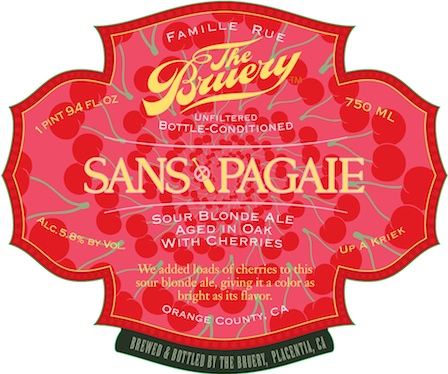
Sans Pagiae (The
Bruery; 5.8% abv)
We make quite a
number of sour ales here at The Bruery, however this one is currently
one of my favorites. This is our version of a Belgian-style Kriek.
It’s perfectly funky with a pleasing sourness and expressive cherry
flavors. Find a bottle fast before they’re all gone.
Temptation
(Russian River Brewing; 7.25% abv)
Vinnie Cilurzo has
been at the forefront of the American wild ale scene for several
years now with his line of barrel aged beauties. Temptation is a
Belgian style blonde aged for 12 months in Chardonnay barrels with
Brettanomyces. This beer showcases a lovely tartness with plenty of
oak and fruit to back it up.
Kriek (Brouwerij
Cantillon; 5% abv)
Cantillon is one of
the most prominent producers of traditional lambic beers coming out
of Belgium. Hunt down anything with their name on the bottle, but
this one in particular is a real treasure. Earthy, musty, and sour
wrap around subtle cherry and red fruit flavors. This is the real
deal.
Rodenbach Grand
Cru (Brouwerij Rodenbach; 6%abv)
Sour ale lovers
would hunt me down and drown me in a vat of Bud Lite if I didn’t
mention this beer. This is a great example of the Flanders Red style
from Belgium. Aged for nearly 2 years in oak tuns, this is a beer
designed for quiet contemplation. Tart cherry and vanilla give way
to a background of malty sweetness. Truly classic.
La Folie (New
Belgium Brewing; 6% abv)
New Belgium Brewing
was lucky enough to steal Peter Bouckaert away from Rodenbach several
years ago and it’s a good thing too. Bouckaert is a God in the
sour beer world of Odin like proportions, but this beer feels more of
a Loki-like effort for all its mischievousness. Sour apple, oak,
dark fruits and a hint of Brett: What’s not to love?
Kriek Ale
(Cascade Brewing; 7.3% abv)
For my money, these
guys are some of the most creative producers of American sour beers.
The logo on their T-shirts even reads “House of Sour” so you
know what you’re in for here. Their Kriek spends over 6 months in
oak with their own special strain of Lactobacillus. This is an
intensely sour beer with gorgeous cherry aromas and a hint of cherry
pie crust in the mouth.
Labels:
beer,
cascade,
craft beer,
lindeman's,
russian river,
sour ale,
sour beer,
the bruery
Monday, July 9, 2012
Matt Strickland - The Wood Cellarman
I am the Wood
Cellarman for The Bruery. What is a “Wood Cellarman”, you ask?
Well, going beyond the fifth-grade level innuendo that is giggling
through your brain right about now, it means that I take care of The
Bruery’s barrel program. Essentially I cellar a lot of wood…There
ya go; you can get it all out of your damn system…
OK.
If you’re reading
this blog right now it probably means that you’re a fan of The
Bruery or that you have some insatiable and disturbing fetish
that I promise you, even on my best day I couldn’t satisfy…so
move along. However, if you fall into the first camp then you
probably already have an idea of what it is I do.
The Bruery currently
boasts one of the largest (I believe we’re in second place right
now behind Goose Island) barreled beer programs in the country. When
I interviewed for this job back in February we were sitting at 1300
barrels filled with another 200-300 waiting to be filled. When I
started this gig a month ago we were at 1700 filled with another 300
on the fill list. And in 3 weeks or so we’ll have a total of 2500
barrels in the warehouse with another 500 on the way by the end of
the year.
It reminds me of a
joke that Jerry Seinfeld once told about painting his apartment every
year and the room felt just a little bit smaller as a result.
(Except in my case the “paint” is barrels and I don’t have a TV
show that will inexplicably turn all my friends’ careers into road
kill.) Every day I walk into that enormous warehouse and it feels
just a little bit smaller.
In addition to
maintaining one of the largest barrel programs in the U.S., I believe
we also have one of the most complex programs as well. Between our
Bourbon Barrel program and our sour beer program we have nearly 20
different beers sitting in barrel. Within each beer there are often
multiple batch types, differing production methods, and barrel
selections. Some barrels we age for years and won’t make it into
this year’s blends while other barrels will. It’s as much a
science as it is a craft - Take that Stephen Hawking!
When I tell people
about my job, two questions usually come up: 1. Why would you want to
be a Wood Cellarman? And, 2. How did you get the job?
The answer to the
second question is that I interviewed with Patrick and Tyler months
ago and I imagine most likely they went out that night, drank a bit
too much Black Tuesday and one of them dared the other to hire me.
The answer to the
first question is a bit more involved.
Barrels have a long
history in beer and wine. Millennia have passed with very few
changes or advances in the art of coopering. Barrels are still
largely put together by hand with rudimentary tools, by skilled
craftsmen and artists whose very existence should be celebrated in
the form of a national holiday. (Even Beauty Queens get an entire
week in August and not a single one of them has come through on their
promises for bikini-clad world peace.)
Wood has an amazing impact on beer. It can impart a wide array of
flavors and aromas. It can alter the beer’s texture. It can act
as a home for microbes looking to get messed up on some beer sugars.
Or it can simply act as a container for the beer to slowly mature in.
No other material can have the same effects on beer and this is why
beer has been sloshing around in barrels for centuries now. It is
very much a part of the storied craft beer tradition and I’m very
fortunate to play a part in it.
My day to day is
rarely routine. Some days I’m racking the contents of puncheon
barrels into smaller sized wine barrels, or maybe adding some cocoa
nibs and vanilla bean to some bourbon barrels. Other days have me
receiving barrel shipments, taking samples, or performing
mini-blends. My mop has also become a close friend.
As a fan of The
Bruery you may have noticed that we are in the middle of a
substantial expansion process right now. As I mentioned above, our
barreled beer program is roughly doubling in size this year and it’s
not like it was the runt of the litter to begin with. Nearly half
our production goes through my warehouse at some point and in the
coming months I plan on sharing more about what we do here and about
barrels in general. So keep pouring glasses of Oude Tart, Sour in
the Rye, Anniversary, and Black Tuesday, because I promise you, we’ve
got more on the way. Until then, I swear to keep a watchful eye on
them for ya.
Labels:
ale,
barrel aged,
barrels,
beer,
belgian,
belgian style,
Black Tuesday,
cellar,
craft beer,
lambic,
microbrewery,
oak,
oak aged,
oude tart,
sour ale,
strong ale
Wednesday, June 13, 2012
Four Years... Goes By Quick!
I apologize to all of you in blogland. First off, I apologize for not contributing to the blog. I've avoided writing here for a very long time, and while I'd like to commit to more blog posts, I feel that doing so won't actually help in me posting more frequently. Secondly, I apologize for not being more timely with this post! I was supposed to write about our four years of being in business during our anniversary month, but with the ten anniversary events our 31 days of May archive promotion, new fermenters, Tasting Room and related construction, and all of the other changes going on at The Bruery, I couldn't find the time!
My life four years ago versus now is completely different. On June 13th, 2008, Tyler was The Bruery's only employee. The two of us did everything. Brewing, bottling, labeling, cleaning, bookkeeping, sales, compliance, the list goes on. Actually, we did have some great volunteers who helped bottle. Some of their wives still haven't forgiven them for the 12+ hour days of bottling (and as a result, coming home smelling like a brewery). One of the early volunteers, Ben Weiss, became a legitimate part time employee on June 23rd. In all of 2008, we brewed the equivalent of what we now brew in less than a week. While each task was fairly minimal given our size at the time, it was a ton of work because it was the first time I was doing any of these tasks, other than cleaning toilets!
We sold our beer in Southern California exclusively with about six accounts, and on June 9th, we sent our first shipment to Stone Brewing Co. It consisted of 12 kegs of Black Orchard, 55 cases of Batch No. 1, 55 cases of Saison Rue, 55 cases of Orchard White, 12 kegs of Orchard White, 5 cases of glassware, and 18 tap handles (which we made ourselves).
![]() |
| Pallets of Batch No. 1 - Levud's in the brewery. |
This first order was the biggest order we'd ship to them until November of 2008. I had no idea what to expect as far as sales volume in the first year, and I was very afraid about brewing too much and having a bunch of beer I couldn't sell. Plus, I was running out of cash and literally couldn't afford to purchase kegs or more bottles until we sold what we already packaged. It was part of the plan to put beer into bourbon and wine barrels to kick off our barrel aging program, and this made up a significant amount of production in the first year. I believe we filled around 50 barrels between June and December of 2008. We had four fermenters, and at this point we likely only had Trade Winds Tripel in the fermenter. Three fermenters were empty, something today that would drive me nuts! This batch of Trade Winds only used thai basil from my backyard. This basil bush went from amazingly full with flowers and leaves to being a bundle of sticks after this first 30 BBL batch. We bottled that batch on June 23rd, and weren't able to sell it until mid-August. Nowadays we start selling Trade Winds in April. When October came around and we started selling Autumn Maple, we still had quite a bit of Trade Winds in inventory that we had to sell by the case from the tasting room at a steep discount. By the end of the year, my wife Rachel came on board to manage the books and Jonas came on board to help in the tasting room. The first year for The Bruery was very difficult. My Dad (my business partner and The Bruery president) and I met every few weeks, and I'd bring the current financial reports and we'd compare them to projections. Those were disappointing times to say the least. There is nothing worse than trying to raise more money than when you're in the process of losing it. We lost a ton of cash, it was a lot of work, but somehow I have mostly fond moments of that time. The beer must have kept me happy!
Comparing our first year to our fourth year is tough-- we might as well be talking about two different breweries. We now have 45 employees, and will likely hit over 50 employees within the next few months. We are distributed in 20 states (plus DC), a few countries, and we're able to sell everything we produce. What a great situation to be in, right?! On an ongoing basis, 40% of our production goes into oak barrels, where on average it will age for 14 months. Our barrel aged beers include everything from rich stouts to sour ales and other experimentations.
![]() |
| The new Tasting Room in progress. |
We are also building a new cellar with 130% more stainless fermentation capacity than we currently have, a new tasting room, a pilot brewhouse, more warehousing space, and a dedicated QC lab! Thankfully, The Bruery isn't losing money anymore. However, we are spending everything we have to build this new part of our brewery, and invest in our barrel aged beers where we won't see a return for some time. My tasks have gone from doing everything at the brewery to just doing what I want to work on, or at least that's the goal. It's a spectacular thing, but to be honest, I'm still stressed! It's just part of my personality that probably won't go away, no matter how good things are going.
I look forward to the next four years, and wonder how I'll perceive myself and The Bruery of 2012 in 2016. Will I consider The Bruery of 2012 to be as small as I now consider The Bruery of 2008? Or will I have overestimated our demand, and find myself selling cases in the tasting room at a steep discount? I'm also curious where the craft brewing industry will be in 2016-- will we reach 10%+ marketshare, or will there be less breweries than today? All I know is it'll be an interesting ride.
Thank you to all of our supporters, including our fans, loyal accounts, distributors, suppliers, writers, current and past employees, for making The Bruery's success possible! This isn't just The Bruery's anniversary, it's all of our anniversary. I look forward to the continued opportunity to celebrate life and great beer with you.
Cheers,
Patrick
The Bruery
Labels:
anniversary,
beer,
black orchard,
brewery,
craft beer,
expansion,
orchard white,
patrick rue,
the brewery,
the bruery,
trade winds,
tyler king
Thursday, April 12, 2012
History of Whiskey
You can't really understand what a bourbon or whiskey barrel does for a beer if you don't know anything about whiskey. Spend an evening watching these videos and you'll find yourself more understanding of what was going on in our oak barrels before beer went into them.
Monday, April 9, 2012
Momma, where do barrels come from?
Step 1) Learn to fell a tree. (don't try this without proper instruction from a certified lumberjack!)
Step 2) Learn the art of cooperage.
Step 3) Create a barrel factory where things are done a bit more efficiently.
Step 2) Learn the art of cooperage.
Step 3) Create a barrel factory where things are done a bit more efficiently.
Labels:
barrels,
bourbon,
cooper,
cooperage,
cut down a tree,
oak,
tree felling
Friday, February 10, 2012
Subscribe to:
Posts (Atom)